


You’re reading the same paragraph for the third time and still have no idea what it actually said. Emails are piling up, you’re making careless mistakes, and your brain simply refuses to cooperate. Another coffee? It may help, but only for a while. There are definitely better candidates for long-term support of mental performance — and they come together in the unique MindBoost formula. What can you expect from it, and why is it worth making part of your daily routine?
MindBoost at a glance
- Who it’s for: For people who need to maintain focus over the long term, work mentally, study, or face a high mental load.
- What it’s for: To support focus, memory, and normal mental performance — without caffeine or conventional stimulants.
- When to take it: 1–2 capsules daily, ideally in the morning or earlier in the day. If you have a more sensitive stomach, taking it with food may be better.
- What it contains: In the recommended daily dose of 2 capsules: 526 mg taurine, 400 mg uridine-5-monophosphate, 300 mg phosphatidylcholine, 220 mg phosphatidylserine, vitamins B6, B9 and B12, and 4 mg piperine.
- What not to expect: An immediate stimulating effect like caffeine, or a replacement for sleep, rest, or a balanced diet.
When your brain is tired, another coffee isn’t enough
You may know the feeling too…
…you’re sitting in a meeting, you can tell something important is being discussed, but your brain just isn’t taking it in.
…or you start an online English lesson, and before long you’re doodling flowers in your notes or scrolling on your phone.
…or you have an important presentation coming up that you studied for all evening, but suddenly your mind goes completely blank.
Caffeine may give you a temporary boost, but it can’t simply “switch on” proper brain function in the long run. To focus, learn, or remember something, information needs to be transmitted properly between nerve cells. Cell membranes and neurotransmitters play an important role in this. And they need ongoing support.
That’s why mental performance is strongly influenced by sleep, stress, movement, diet, and the amount of time spent in front of screens. But if you face consistently high demands on concentration, it may make sense to give your brain something extra on a regular basis.
And that is exactly the mission of MindBoost.
What is MindBoost?
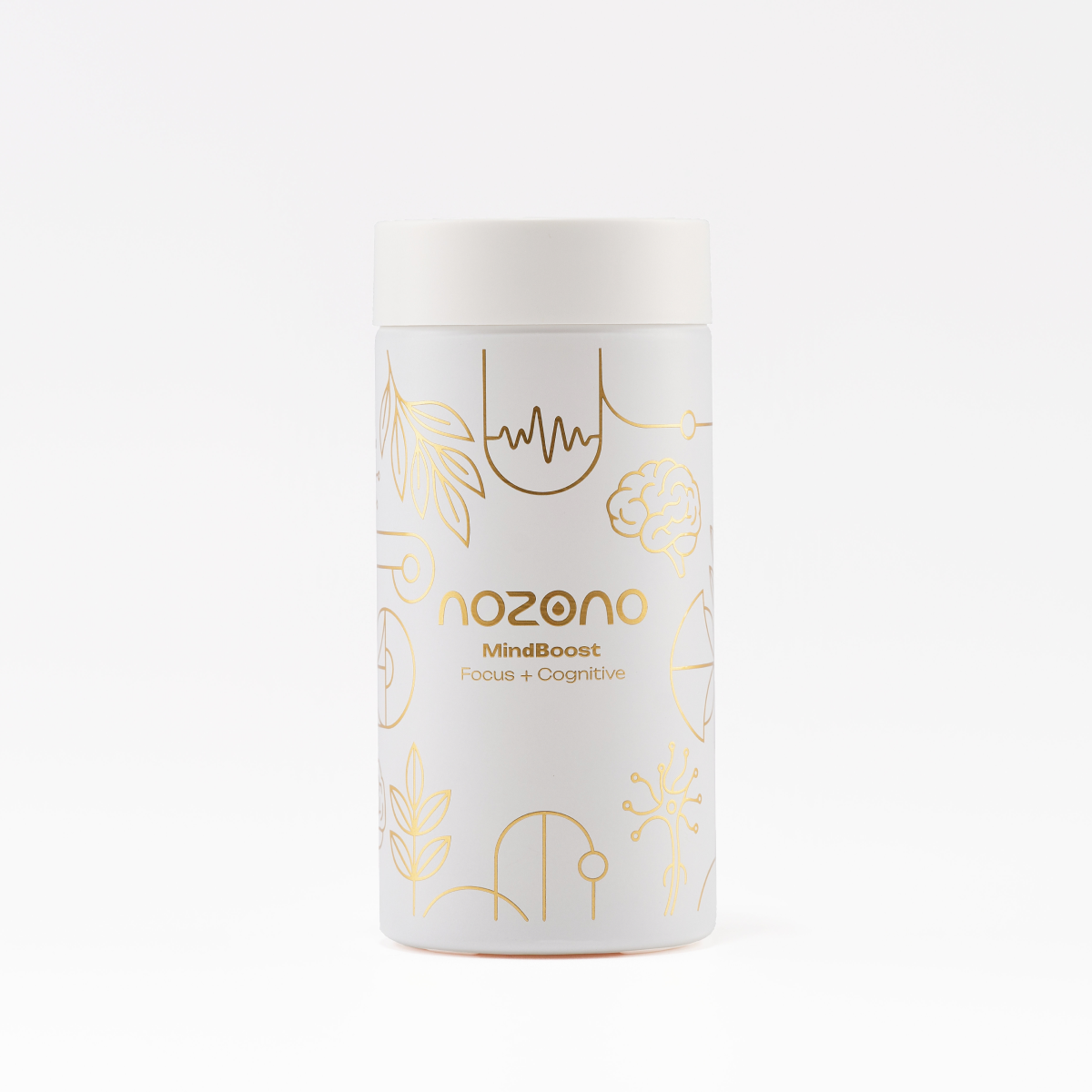
MindBoost is a comprehensive formula to support focus and mental vitality. Instead of caffeine and other stimulants, it combines taurine, uridine-5-monophosphate, phosphatidylcholine, phosphatidylserine, and vitamins B6, B9, and B12. BioPerine® then helps improve the absorption of these substances.
Eight ingredients, one daily dose
|
Ingredient |
Amount in 2 capsules |
What we know about it |
|---|---|---|
|
Taurine |
526 mg |
A natural part of the nervous system involved in many cellular and neural processes. |
|
Uridine-5-monophosphate |
400 mg |
A nucleotide naturally present in the body that serves as a building block of RNA and is used as a dietary supplement to support the nervous system and brain function. |
|
Phosphatidylcholine |
300 mg |
A structural component of cell membranes and a source of choline. |
|
Phosphatidylserine |
220 mg |
A component of the cell membranes of nerve cells. |
|
Vitamin B6 |
5 mg |
Contributes to normal psychological function, the normal functioning of the nervous system, and the reduction of tiredness and fatigue. |
|
Vitamin B9 |
400 μg |
Contributes to normal psychological function and the reduction of tiredness and fatigue. |
|
Vitamin B12 |
5 μg |
Contributes to normal psychological function, the normal functioning of the nervous system, and the reduction of tiredness and fatigue. |
|
BioPerine® |
4 mg |
Black pepper extract that increases the absorption of some active substances. |
Why these particular ingredients?
Phosphatidylcholine: building material for cell membranes
Phosphatidylcholine is one of the main phospholipids in cell membranes and is also a source of choline. Choline is a precursor of acetylcholine, a neurotransmitter involved, among other things, in processes linked to learning and attention.
Phosphatidylserine: a substance studied in relation to memory
Phosphatidylserine is another important component of cell membranes, including the membranes of nerve cells. Its relationship to memory and cognitive function has also been studied in clinical trials, where it showed a positive effect especially on delayed word recall.
Uridine-5-monophosphate: part of cellular processes
Uridine-5-monophosphate is a source of uridine, a naturally occurring compound in the body that takes part in nucleotide metabolism and in processes associated with the synthesis of membrane phospholipids. This is why uridine is also being studied in relation to the formation and function of nerve synapses.
Taurine: a natural part of the nervous system
Most people associate taurine with energy drinks. In MindBoost however, it is not meant to act as a quick stimulant. It is a naturally occurring substance that is also found in high amounts in the nervous system and is involved in the regulation of neural activity, cellular balance, and the protective mechanisms of neurons. Research is therefore exploring its possible role in the ageing of the nervous system and cognitive function. In experimental animal studies, it has been associated with better learning and spatial memory.
Vitamins B6, B9, and B12: essentials in forms natural to the body
Vitamins B6, B9, and B12 contribute to normal psychological function, the normal functioning of the nervous system, and the reduction of tiredness and fatigue.
MindBoost contains their bioactive forms: pyridoxal-5-phosphate, methylfolate, and methylcobalamin — forms close to those the body naturally uses in its metabolism.

So how does MindBoost work?
MindBoost combines substances that play different roles in processes important for the functioning of the nervous system — from neural signalling and the formation of cell membranes to energy metabolism:
-
Supports processes linked to information transfer, attention, and learning.
-
Provides substances important for nerve cell membranes and neural connections.
-
Helps cover the nutritional basics for normal psychological function and the reduction of fatigue.
-
Supports the brain’s adaptability and the stability of nerve cells.
-
Offers a more sustainable approach to supporting mental performance than fast-acting caffeine stimulants.
The mission of MindBoost is to support the processes that normal mental performance depends on and to complement the diet with selected substances that may further support mental vitality.
What MindBoost is not
MindBoost is not an energy drink or a “pick-me-up” meant to create a feeling of peak focus within half an hour. It contains no caffeine or conventional stimulants. Its purpose is not to create a short mental peak followed by a crash, but to become part of a long-term routine.
It is not a substitute for sleep, rest, movement, or a varied diet either. If you sleep four hours every night, MindBoost won’t turn them into eight.
How should you take MindBoost?
The recommended daily dose is 1–2 capsules per day, ideally in the morning or earlier in the day. The capsules can be taken with or without food. If you have a more sensitive stomach, it is better to take MindBoost with food, although it is generally well tolerated thanks to the plant-based capsule and the limited amount of additives.
When can you expect the first changes?
With supplements that support mental performance over the long term, changes can be harder to notice than with something like caffeine. A sudden feeling of the brain being “switched on” is not their goal.
First week
Subjectively, you may begin to notice less mental fatigue and steadier attention. At first, though, don’t expect any dramatic changes.
First month
Focus, working memory, speed of recall, and the ability to maintain deep focus may gradually improve.
Three months
Longer-term support of nerve cells may show up as more stable mental performance and less frequent “brain fog.”
Six months
Regular use is suitable as part of long-term support for mental vitality and cognitive function.
Who is it for — and who is it not for?
MindBoost was created for people whose main working tool is their mind:
-
for lawyers who work with texts all day;
-
for programmers who spend hours looking for a bug in code;
-
for entrepreneurs and managers who make dozens of important decisions in a single day;
-
for students, especially during exam periods;
-
for creatives who need to sustain attention for long periods.
And also for anyone who feels their brain “doesn’t work like it used to,” but doesn’t want their mental performance to depend only on a regular flow of coffee.
That said, MindBoost remains a complement to good fundamentals, not a replacement for them. Nor is it some kind of elixir of immortality that lets you function nonstop.
If you take medication — especially blood thinners or medication for mental health conditions — consult your doctor about whether MindBoost is suitable for you. The piperine it contains could affect their absorption.

What does the research say?
B vitamins and cognitive performance (2022)
A 2022 cross-sectional study analysing data from 2,421 older adults in the US NHANES database compared the intake of vitamins B6, B9, and B12 with the results of several cognitive tests.
Adequate vitamin B9 intake was associated with a lower incidence of poor performance in tests of immediate and delayed word recall, verbal fluency, and processing speed. For vitamin B12, a similar association was observed for memory, verbal fluency, processing speed, attention, and working memory. For vitamin B6, the significant association was seen mainly with processing speed.
Phosphatidylserine and memory (2010)
A randomized study in Journal of Clinical Biochemistry and Nutrition followed 78 people aged 50–69 with mild memory difficulties. After six months of taking soy phosphatidylserine at doses of 100 or 300 mg daily, some participants showed improvements in certain memory markers, especially delayed word recall.
Uridine and the formation of neural connections (2010)
For uridine-5-monophosphate, the most interesting findings come mainly from experimental research. In animals, giving uridine together with DHA and choline increased the levels of certain membrane phospholipids and synaptic proteins as well as the density of dendritic spines in the hippocampus. These structures are part of neurons where synaptic connections between nerve cells are formed.
Uridine has also been studied in humans. In a small study of 17 healthy men, taking 2 g of uridine daily for seven days increased certain brain precursors of membrane phospholipids.
FAQ
- Will MindBoost replace my coffee?
No, not if you’re looking for an immediate feeling of stimulation. MindBoost contains no caffeine or conventional stimulants. Its principle is different — it aims at long-term support for mental vitality through substances that are a natural part of our nervous system.
- How long does it take to start working?
You may notice a subjective change within the first few days, but to fairly assess whether MindBoost really suits you, it is better to watch for changes over several weeks of regular use.
- Can I take it long term?
Yes, MindBoost is designed to become part of your long-term daily routine. At the same time, it does not replace a varied diet and a healthy lifestyle.
- Is MindBoost suitable for students too?
Yes, it can be helpful especially during periods of increased mental strain, such as exam season. But it will not replace sleep, regular meals, or breaks from studying for students either.
- How is MindBoost different from other supplements for mental performance support?
MindBoost does not rely on temporary stimulation, but on targeted support for the body and creating the most suitable conditions possible for the proper functioning of the entire nervous system. It combines eight ingredients in one daily dose. That means you do not need to buy phosphatidylserine, phosphatidylcholine, uridine, and individual B vitamins separately. The emphasis is placed not only on adequate amounts, but also on the quality and body-familiar form of these active substances — all in line with the available scientific knowledge.
MindBoost is also vegan and free from gluten, GMO, preservatives, and major allergens.
- How much does MindBoost cost?
A glass jar with 60 capsules costs CZK 1,790. At the recommended dose of two capsules per day, it lasts about a month, so the daily dose costs approximately CZK 59.70. That is less than what we usually spend in a café.
For long-term use, you can also choose the more convenient subscription option, which can reduce daily costs to as little as CZK 51. You can pause or cancel the subscription at any time, and if you are not satisfied, you can make use of the 90-day money-back guarantee.
While others slow down in the afternoon, you keep going. MindBoost helps keep your mind sharp from morning to evening – an edge you can feel in every decision. Without caffeine or stimulants
- Helps maintain deep focus even during long hours of demanding work
- Supports your memory and the retention of new information
- Helps clear mental fog and restore clarity to your thoughts
The path to better performance does not lead through more pressure, but through long-term care
The ability to focus is not just a matter of willpower. You need good sleep, nourishing food, and regular movement. And your brain also needs room to switch off. Once these basic needs are met, you can support its performance a little more — for example with comprehensive food supplements backed by science-based formulations.
MindBoost is therefore not another way to force yourself to work through fatigue. It is a comprehensive formula for those who place high demands on their mind and want to care for how it functions over the long term — without caffeine spikes (and the crashes that follow) and without the illusion that we can keep squeezing the brain indefinitely without giving anything back in return for its constant effort.
After all, a sharp mind is not built on operating at maximum all the time. It rests more on having something to draw from when it matters.
Sources:
-
https://pubmed.ncbi.nlm.nih.gov/35359912/
-
https://pubmed.ncbi.nlm.nih.gov/21103034/
-
https://pubmed.ncbi.nlm.nih.gov/21176029/
-
https://pubmed.ncbi.nlm.nih.gov/21091953/
-
https://pubmed.ncbi.nlm.nih.gov/40320621/


Share:
How to slow ageing? LifeCharge will infuse energy into your veins and your cells