
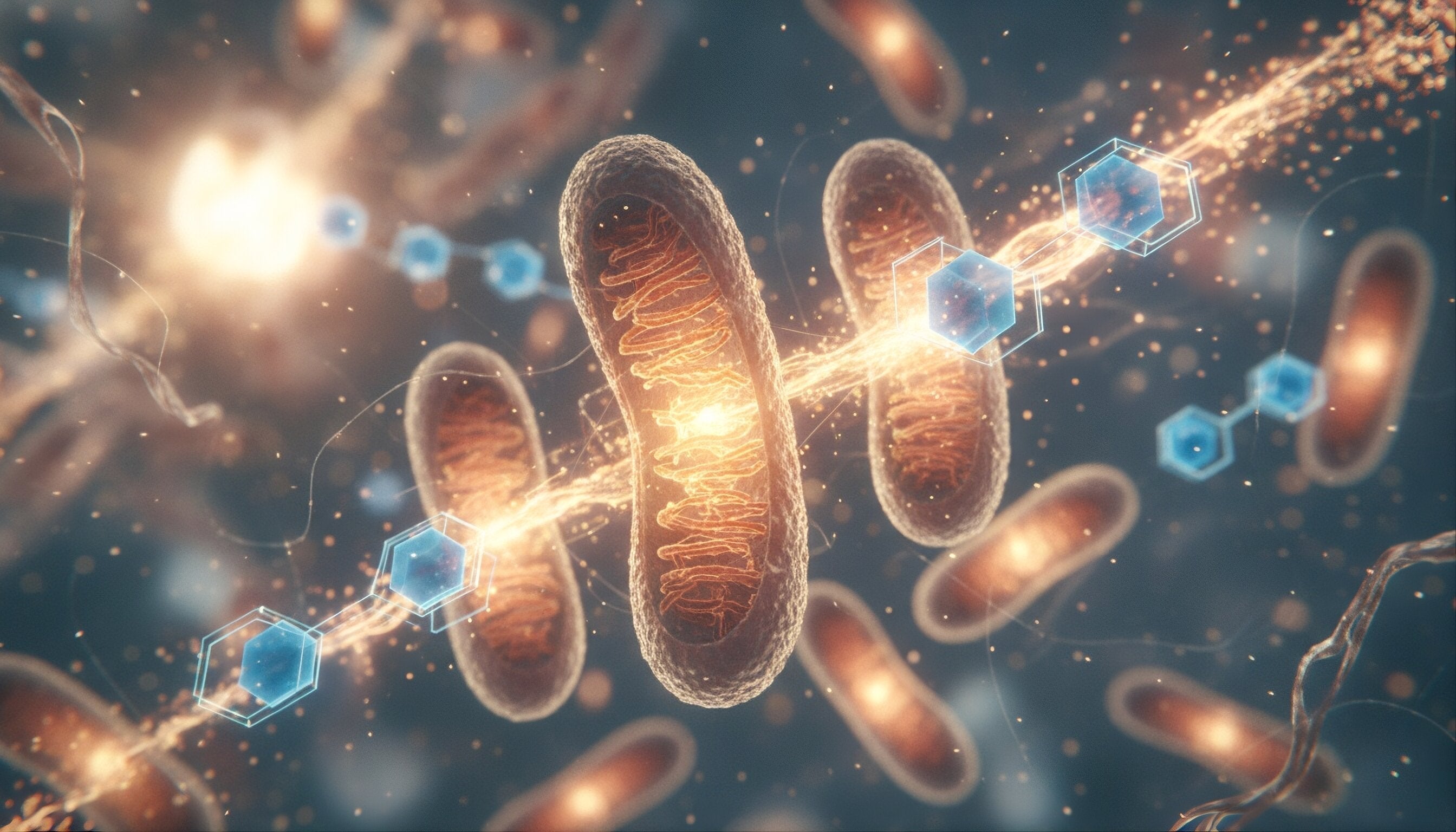
The feeling that your body is not “running at full capacity” may not be related only to sleep or advancing age. The amount of energy we have is largely determined by mitochondria – tiny structures inside our cells that are one of the most underestimated pillars of long-term health. What exactly do they do for us, and how can we support their function?
What are mitochondria and why are they important?
You can think of mitochondria as small but powerful cellular power plants. They are found in almost every cell in the body, and their main role is to convert nutrients from food into energy in the form of the ATP molecule – the universal “fuel” for muscles, the brain, and organs.
The more energy a cell needs, the more mitochondria it usually contains. That is why muscle cells, nerve cells, and heart cells tend to have significantly more of them than other tissues.
But mitochondria are not just passive energy producers. They also help with:
-
supporting proper cell function,
-
protecting cells from oxidative stress,
-
regulating cell renewal and the natural “recycling” of damaged structures (known as mitophagy).
So by now you may already understand that as mitochondria function, so does the whole body.
Energy today, health tomorrow
With age, stress, or long-term overload, mitochondrial function gradually declines. And that is far from ideal. Research shows that reduced mitochondrial activity goes hand in hand with:
-
chronic fatigue,
-
a slower metabolism,
-
poorer recovery,
-
reduced muscle strength,
-
a higher risk of chronic disease.
It is no surprise, then, that mitochondrial dysfunction is now being discussed as one of the key mechanisms of aging. Not because mitochondria “stop working overnight,” but because they gradually lose efficiency over time – producing less energy while generating more by-products that place strain on cells.

The good news is that mitochondria are surprisingly adaptable. Under the right conditions, they can become more efficient again and can even multiply. So nothing is lost yet.
Mitochondria thrive on the right kind of stress
One of the most interesting findings of recent years is that mitochondria respond positively to short-term, moderate stress. This principle is known as hormesis.
Examples of natural stimuli for mitochondria include:
-
physical activity (especially endurance and interval training),
-
short-term fasting or longer breaks between meals,
-
exposure to cold or heat,
-
quality sleep and respecting circadian rhythms.
These signals tell the body that it needs to produce energy more efficiently. And mitochondria respond by increasing their capacity.
NAD+: a key player in cellular energy
Longevity experts are also looking for additional ways to support mitochondrial health even more. And their research looks promising. For example, they have found that mitochondria cannot function without NAD⁺ (nicotinamide adenine dinucleotide). This coenzyme transfers electrons during energy production, activates cellular repair mechanisms, and generally supports proper mitochondrial function.
However, NAD⁺ levels naturally decline with age – some studies suggest by as much as 50% between the ages of 20 and 60. This may contribute to lower energy levels and a reduced ability to recover.
That is why science is now intensively exploring NAD⁺ precursors – substances the body can use to produce NAD⁺ on its own. One of the most established is nicotinamide riboside (NR).
Did you know…
…mitochondria also need other “building” and “fuel” substances?
In addition to NAD+, the availability of other nutrients involved in energy metabolism also plays an important role:
-
Coenzyme Q10 is part of the mitochondrial respiratory chain and is directly involved in ATP production. Its levels decline with age, especially in energy-demanding – yet highly important – tissues.
-
B vitamins (B1, B2, B3) are essential partners for the enzymes that convert carbohydrates, fats, and proteins into energy.
-
PQQ (pyrroloquinoline quinone) is a compound studied for its potential to support the formation of new mitochondria (mitochondrial biogenesis).
-
Glycine is involved in the production of glutathione – one of the main antioxidants that helps protect mitochondria from damage.
-
TMG (trimethylglycine) supports natural biochemical processes in the body (including NAD⁺ metabolism) that help maintain cellular energy.
It is therefore difficult to achieve targeted mitochondrial support with a single isolated substance. For comprehensive mitochondrial care, it makes sense to choose synergistic multi-ingredient supplements, which can be a suitable complement to a healthy lifestyle.
MitoGenix combines nutrients involved in energy metabolism, mitochondrial protection, and adaptation to stress. NAD+ Prime helps increase NAD⁺ levels, which are key to cellular energy, and supports its efficient use in the body.




Food supplement for mitochondrial energy, metabolic balance, and steady vitality throughout the day, 60 capsules
- Activates AMPK - the body’s main metabolic switch
- Increases mitochondrial efficiency and cellular ATP energy production
- Supports healthy sugar and fat metabolism
- Helps increase NAD+ levels and supports cellular vitality
- Supports autophagy and natural metabolic renewal
- Contributes to more stable energy without sharp crashes
- Supports physical endurance, recovery, and muscle resilience
- Contains no caffeine or typical stimulants
- Monthly supply: 60 capsules | 30 daily servings
- Every NOZONO product comes in a luxurious glass jar



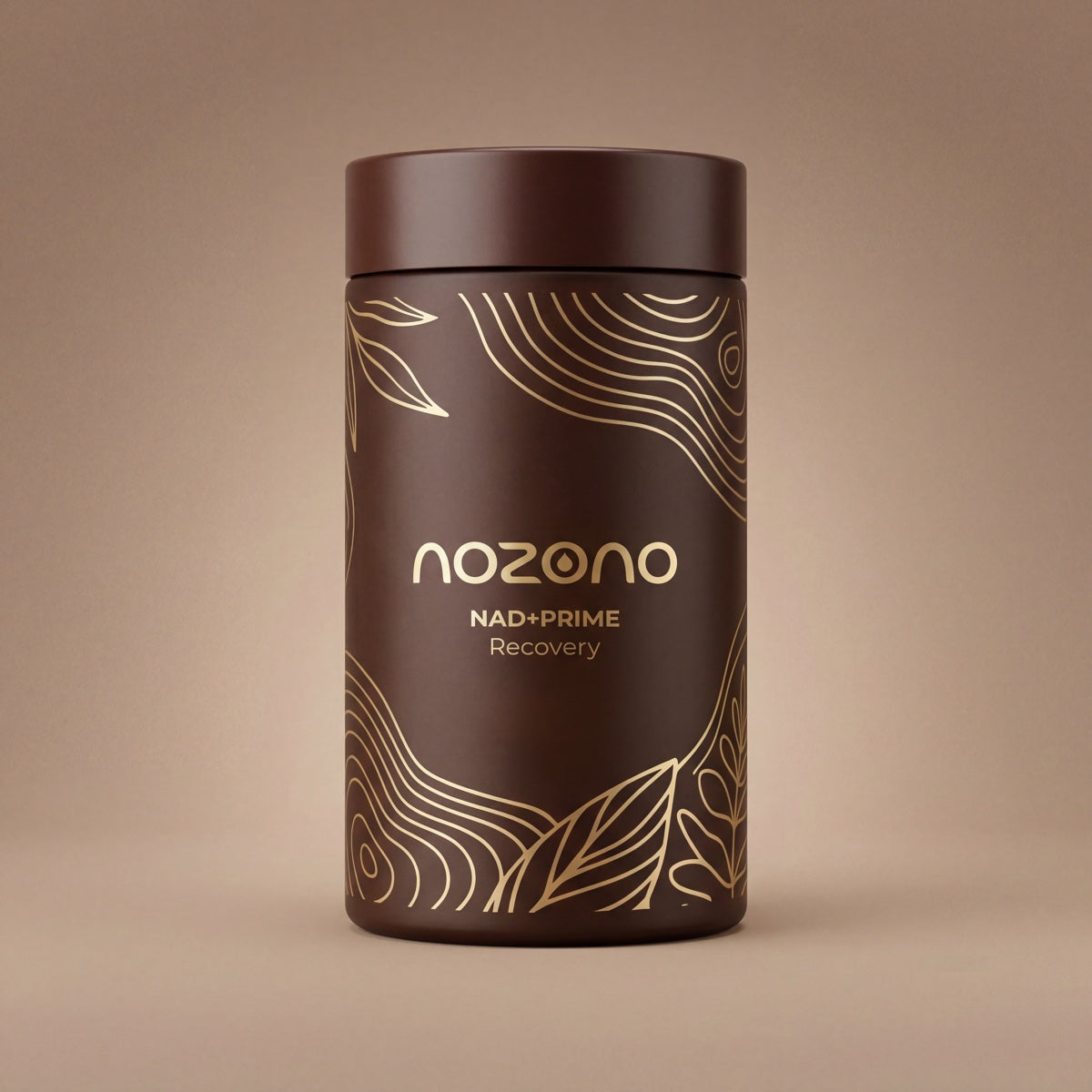
Food supplement to support NAD+, cellular energy, and long-term vitality, 60 capsules
- Increases NAD+ levels in the body
- Supports mitochondrial energy production and metabolism
- Activates sirtuin proteins associated with healthy ageing
- Protects cells against oxidative burden
- Supports DNA repair and the maintenance of epigenetic stability
- Protects cells against oxidative stress
- Supports recovery and physical and mental vitality
- Helps maintain skin health, hydration and renewal
- Supports the circadian rhythm and cellular resilience
- Monthly supply: 60 capsules | 30 daily servings
- Every NOZONO product is stored in a luxurious glass jar
Energy as a long-term asset
Forget the quick “boost.” Supporting mitochondria is an investment in long-term vitality, resilience, and the body’s ability to recover. And that is where the true luxury of modern health lies: having energy not just today, but being able to rely on it tomorrow as well.
Sources:
- https://pubmed.ncbi.nlm.nih.gov/26942670/
- https://pubmed.ncbi.nlm.nih.gov/23454757/
- https://pmc.ncbi.nlm.nih.gov/articles/PMC7963035/
- https://www.mdpi.com/2072-6643/14/9/1811
- https://pubmed.ncbi.nlm.nih.gov/19861415/



Share:
How to naturally support your immune system so illness doesn’t slow you down?
Gut microbiome: the quiet ally of immunity, mental wellbeing, and longevity