
When aiming to live a long and healthy life, we often focus on what extra to give the body. Yet one of the strongest pillars of longevity is literally right under our skin. Muscles are not just there to help us carry groceries or look good in a T-shirt. They influence metabolism, insulin sensitivity, bone health, the immune system, balance, independence in old age, and even the risk of premature death. And the best part? It’s never too late to start building them.
Muscles are about more than strength
In the past, muscles were seen mainly as mechanical tissue that enables movement. Today we know they are a highly metabolically active organ that communicates with the whole body through so-called myokines – signaling molecules released during muscle contraction.
These affect, for example:
-
glucose metabolism,
-
insulin sensitivity,
-
inflammatory processes,
-
brain function,
-
bone health,
-
the body’s recovery processes.
Regular muscle stimulation therefore activates a range of adaptive processes that support recovery, metabolic health, and the body’s long-term function.
Why are muscles so important for longevity?
1. They act as a metabolic powerhouse
We get our energy primarily from glucose. And muscles are its biggest “consumer.” In practice, this means that when we have more active muscle mass, we can afford a slightly higher energy intake without gaining excess fat.
A well-muscled body also handles glucose more efficiently, which reduces the risk of insulin resistance or type 2 diabetes.
2. They protect us during illness
Muscles serve as a reservoir of amino acids. During infection, injury, or surgery, the body draws on them as building material for tissue repair and for the functioning of the immune system. People with greater muscle reserves therefore often cope better with demanding health situations.
3. They help maintain independence
Age itself is often truly just a number, and even when that number starts getting fairly high, it does not necessarily have to be a problem. The real issue begins when a person can no longer manage everyday activities: getting up from a chair, climbing stairs, carrying groceries, or preventing a fall in time. And none of that is possible without muscles.
4. They are linked to a lower risk of death
A number of population studies show that greater muscle strength and better cardiorespiratory fitness are associated with lower overall mortality. A very practical indicator is considered to be handgrip strength, which surprisingly reflects the body’s overall physical condition very well.
Things change after thirty
While in our twenties a few push-ups may be enough for muscles to appear almost magically, approximately from the age of thirty onward, we begin to slowly lose muscle mass. And if we do nothing about it, this process gradually accelerates with age. That is a problem – and far from being only an aesthetic one.
Besides the loss of muscle volume itself, the bigger warning sign is mainly the loss of strength and function. In older age, this can progress into a condition called sarcopenia, when a significant decline in muscle mass and strength causes worsening balance, reduced mobility, and a higher risk of falls.
After hospitalization or surgery, people with a low proportion of muscle usually recover more slowly, tolerate long periods of inactivity less well, and often find it much harder to return to everyday life. In extreme cases, sarcopenia can even lead to loss of independence and, in combination with other factors, possibly also premature death.

How to build muscle mass
1. Strength training
You do not need to spend hours in the gym. Just 2–3 strength-training sessions per week are enough to work the whole body. To keep your muscles from getting too comfortable, increase the load gradually and from time to time include different exercise variations or add completely new ones. The most effective tend to be compound movements such as squats, lunges, push-ups, rows, deadlifts, or presses.
If you are starting exercise later in life and do not feel confident lifting heavy weights, try training with resistance bands, TRX, and other tools. Join a specialized group class, or turn to an experienced trainer (at least for the first few sessions).
2. Enough protein
Alongside exercise, muscle also needs building material – and that means protein. Most expert recommendations for active adults point to around 1.2–1.8 g of protein/kg of body weight per day.
A higher intake is often particularly suitable:
-
for older adults,
-
during weight loss,
-
during more intensive training.
Try to spread your protein intake evenly throughout the day. The easiest way to do this is to add a source of protein (meat, dairy products, tofu, etc.) to every meal, which also helps prevent large fluctuations in blood sugar levels.
3. Do not stop moving outside of training
Strength training twice a week is great, but if we spend the rest of the time sitting, it is not enough. Daily walking, gardening, or taking the stairs instead of the elevator help maintain muscle activity as well as metabolic health.
4. Give your body time to recover
Paradoxically, muscle does not grow during exercise, but afterward, when the body repairs stressed tissues and we become stronger so we can handle a similar load better next time.
So between training sessions, make sure to get:
-
enough sleep,
-
a balanced, nutrient-rich diet,
-
enough protein,
-
time for rest and active recovery (such as a massage or sauna).
Why is strength training especially important for women?
Lifting weights and building muscle are usually seen more as a male domain. But women may benefit from strength training perhaps even a little more.
During menopause, there is a significant drop in estrogen, which affects the reproductive system and bone health, but also muscle tissue. After menopause, the loss of muscle mass and strength accelerates and body composition changes – body fat increases at the expense of muscle. Overall weight may not rise dramatically, but body shape and vitality often unfortunately change for the worse.
When choosing physical activity, many women mainly ask how many calories it burns. But in light of new scientific findings, they should – especially in middle and older age, though ideally even earlier – regularly include resistance (strength) training. It not only effectively increases muscle strength, helps maintain muscle mass, and improves functional fitness, but at the same time also supports bone health, which is especially important after menopause.

Better late than never
Muscle mass is therefore one of the most valuable things we can “save up” for older age. But even if you have not done so yet, it is never too late to start.
Of course, as the years go by, building muscle mass tends to become slower and the body needs more time to recover. But systematic reviews of studies show that regular strength training can significantly increase muscle strength and support muscle growth even in older adults. So you can still meaningfully slow its natural decline, improve your physical performance, and extend your years of health and independence.
Did you know…
…muscles need not only protein, but also enough energy and certain nutrients?
The fastest way to lose muscle mass is a combination of minimal movement and low energy intake. In addition to enough calories, the following are especially important for proper muscle function:
- high-quality protein with enough leucine (meat, fish, cheese, legumes, or whey protein),
- B vitamins – contribute to normal energy metabolism (meat and fish, organ meats, eggs and dairy products, whole grains and oats, nutritional yeast),
- magnesium – contributes to normal muscle and nervous system function (pumpkin and sunflower seeds, high-cocoa dark chocolate and cocoa, almonds and cashews, leafy greens, mineral waters),
- omega-3 fatty acids, which may support muscle adaptation to training (fatty sea fish or food supplements).
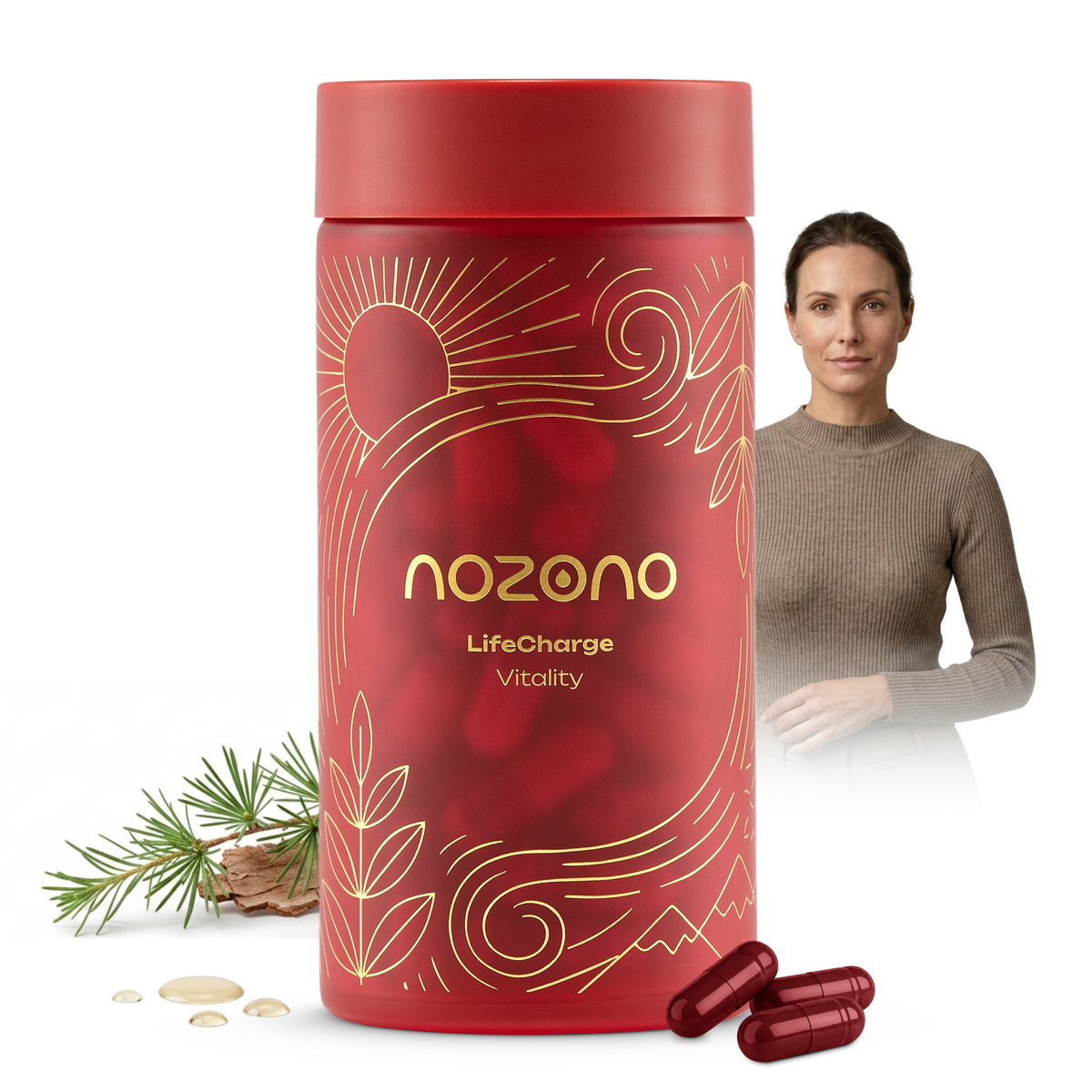
Muscle performance also depends greatly on how well the cells themselves and their mitochondria function. That is why it may also make sense to focus on supporting cellular energy production – for example with the help of the synergistic supplement LifeCharge, which contains a combination of polyphenols, calcium alpha-ketoglutarate, and other substances that support healthy cellular function.
Longevity isn’t built overnight. Three capsules every morning, day after day.
- Protection of cells from oxidative stress
- 5 compounds from longevity research
- Over 1 gram of Ca-AKG a day
What should you take away from this?
Many people associate longevity mainly with how long the heart or brain keeps working well. But it is just as important whether, at seventy, you can still walk to the store on your own, climb stairs, or get up from the floor without help.
You do not need to train like a bodybuilder or chase records. You simply need to remind your muscles regularly that they are still needed. The body remembers this signal surprisingly well – and rewards you with greater strength, better metabolism, and a higher chance of staying healthy and independent for longer.
Sources:
-
https://link.springer.com/article/10.1186/s11556-021-00277-7
-
https://link.springer.com/article/10.1007/s40520-024-02920-6
-
https://pubmed.ncbi.nlm.nih.gov/36283059/
-
https://pubmed.ncbi.nlm.nih.gov/32740889/



Share:
Coffee and its alternatives: How to gain energy wisely, not just on borrowed time?
Stable blood sugar levels are key to energy, focus, and sweet cravings