
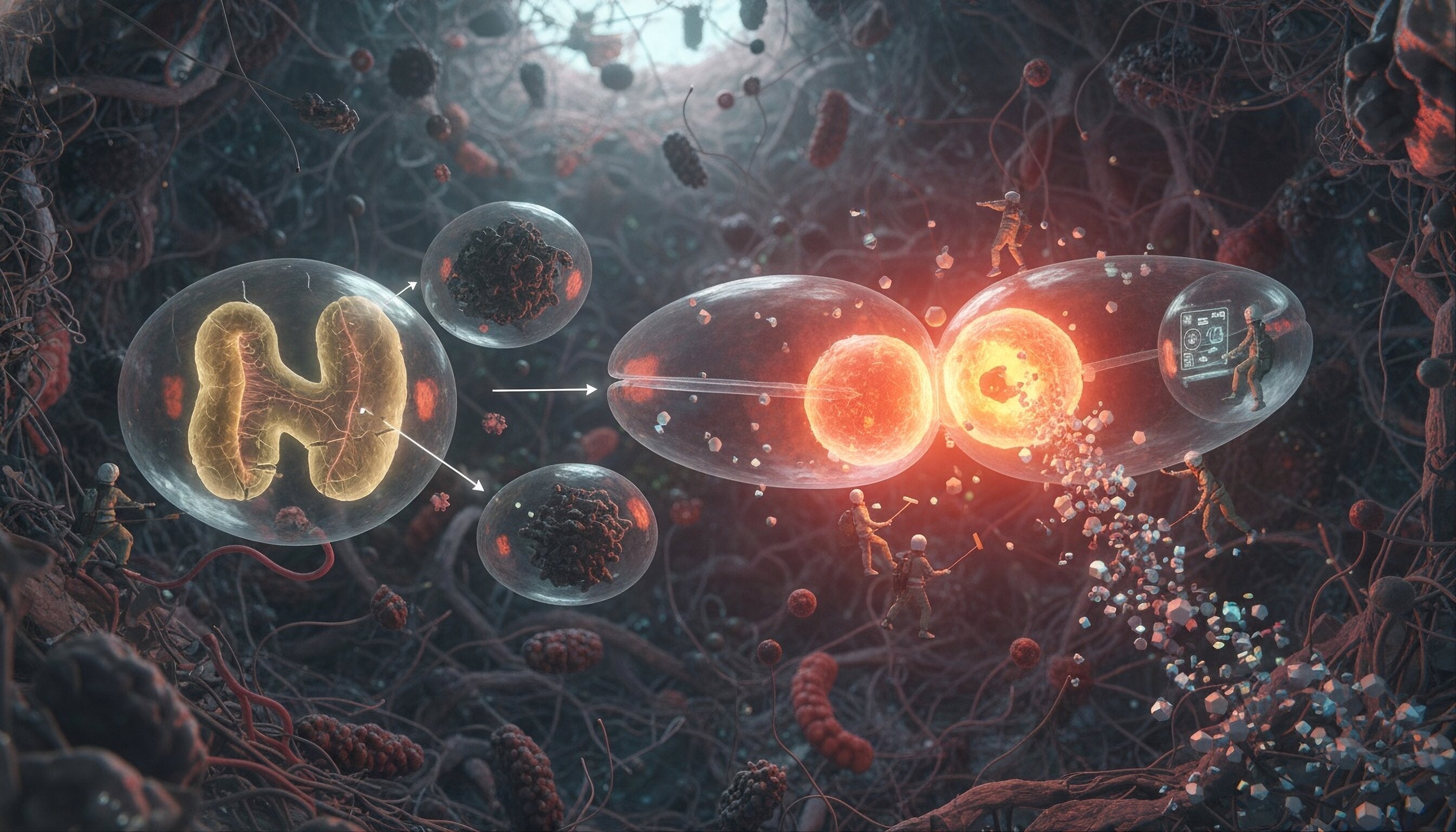
Our bodies are constantly wearing down – but they don’t give up without a fight. During a process known as autophagy, the body repairs damage, recycles damaged cellular components, and removes what no longer serves us. This regular clean-up contributes to longevity, metabolic health, and cellular resilience to stress. And we can actively support it. How? Let’s take it step by step.
What Is Autophagy?
The term autophagy comes from Greek and literally means “self-eating.” It may sound a little drastic, but the opposite is true – it is a sophisticated recycling system that has our backs every single day.
During autophagy, the cell identifies damaged or dysfunctional components (such as old mitochondria, damaged proteins, or cellular “waste”) and breaks them down into basic building blocks that it can reuse.
Autophagy helps to:
-
remove damaged cellular structures,
-
support cellular renewal,
-
keep cells in good condition,
-
better cope with periods of stress and energy shortage.
Impaired autophagy, on the other hand, has been linked by research to a faster onset of aging-related changes as well as certain chronic diseases.
Autophagy = Longevity?
Autophagy acts as an ongoing maintenance mechanism. It repairs damage, helps prevent the gradual accumulation of cellular “waste,” and enables cells to remain efficient for longer.
In other words: the better the body manages cellular clean-up and recycling, the better it can function over the long term.
So, have we discovered the recipe for immortality? Not quite. Autophagy has its limits, and much remains to be explored. However, based on current knowledge, this appears to be one promising path toward longevity.
Which raises the question:
How Can You Naturally Support Autophagy?
1. Extend the Time Between Meals
Digesting food and storing energy are the body’s priorities. Repair and recycling processes therefore take place only when the body is no longer occupied with processing what we have just eaten.
You can support autophagy by avoiding constant snacking throughout the day or by not eating late at night. Simply extending your overnight fasting window can give your body up to 14 hours without food, providing ample time for repair work.
A more advanced strategy often associated with autophagy is intermittent fasting.
The principle is simple: you refrain from eating for part of the day, allowing the body to gradually switch from “storage and growth” mode to “repair and recycling” mode once readily available energy has been depleted. Specifically, lower nutrient availability and reduced insulin levels are among the signals that may activate autophagy. In practice, a 16/8 schedule (16 hours of fasting and an 8-hour eating window) is commonly used.

In general, caloric moderation is also beneficial, and it often becomes easier to maintain during intermittent fasting.
You may also experiment with longer fasting periods, but keep in mind that they are not suitable for everyone. Individuals with eating disorders, pregnant women, or people with certain metabolic conditions should exercise caution.
2. Move Regularly
Physical activity represents a controlled form of stress to which the body responds through adaptation – becoming stronger and more resilient. Exercise also stimulates autophagic processes, particularly in muscles (though not exclusively). Regular physical activity helps cells more efficiently “clean up” damaged components and manage energy use.
In practice, it is beneficial to combine strength training, endurance activities (even brisk walking), and more natural movement throughout the day.
However, beware: excessive training without adequate recovery can have the opposite effect.
3. Prioritize Quality Sleep
A large portion of the body’s regenerative processes takes place during sleep. If we consistently sleep too little or experience poor-quality sleep, the body’s stress burden increases, metabolic regulation worsens, and cellular renewal suffers significantly.
► Read more in our article on sleep and longevity.
Regenerative processes, including those related to autophagy, may also benefit from controlled thermal stress, such as regular sauna use and cold exposure.
What Disrupts Autophagy?
The most problematic factors over the long term include:
-
constant snacking and overeating,
-
excessive consumption of ultra-processed foods,
-
lack of physical activity,
-
chronic stress,
-
long-term sleep deprivation.
These factors are commonly associated with inflammation, metabolic dysregulation, and a reduced capacity for cellular regeneration.

Did You Know...
...that you can also support autophagy through specific foods?
There is probably no ultimate “autophagy booster.” However, certain compounds have attracted scientific interest because they may specifically support cellular renewal and autophagy-related processes.
-
Polyphenols
These naturally occurring plant compounds with antioxidant properties may help regulate cellular stress and support autophagy.
One particularly well-studied example is resveratrol (found, for instance, in grape skins), which has been shown in studies to influence mechanisms related to cellular regeneration and energy metabolism.
Other polyphenols can be found in berries, olive oil, green tea, cocoa, and turmeric.
If you prefer supplements, choose products with synergistic formulations, such as LifeCharge, enriched with calcium alpha-ketoglutarate, which may support cellular energy metabolism and regeneration.
-
Omega-3 Fatty Acids
Omega-3 fatty acids (EPA and DHA) help regulate inflammatory processes in the body and support the health of cellular membranes. Some research suggests they may also influence cellular repair mechanisms, including autophagy.
The primary sources of omega-3s are fatty marine fish, fish oil, and high-quality dietary supplements.
-
Spermidine
One of the most actively researched compounds in relation to autophagy today is spermidine – a polyamine that the body partly produces itself and partly obtains through diet.
Research is still ongoing, but current evidence suggests that spermidine may support autophagic processes and cellular renewal. Higher spermidine intake has even been associated in some population studies with lower mortality and better cardiometabolic health.
Spermidine naturally occurs in wheat germ, fermented foods, legumes, and certain cheeses.
Support for NAD+, cellular energy, and long-term vitality
Key Takeaways
Supporting autophagy may be one pathway toward living longer and healthier. However, balance is essential. For example, excessive exercise combined with prolonged fasting can negate the benefits of autophagy due to negative consequences such as muscle loss and hormonal disruption.
Instead of extremes, it makes more sense to focus on the fundamentals that help the body alternate between performance and recovery – regular physical activity, quality sleep, longer overnight fasting periods, reduced chronic stress, fewer ultra-processed foods, and moderation rather than overeating.
Sources:
- https://pmc.ncbi.nlm.nih.gov/articles/PMC12912249/
- https://pubmed.ncbi.nlm.nih.gov/30633901/
- https://pubmed.ncbi.nlm.nih.gov/29618831/
- https://www.science.org/doi/10.1126/science.aan2788



Share:
The kind of fatigue sleep won’t fix: How to “reset” an overloaded nervous system?
Circadian Rhythm: Why It Matters When You Sleep, Eat, and Exercise?